 SHOP ONLINE
 REFERRALS
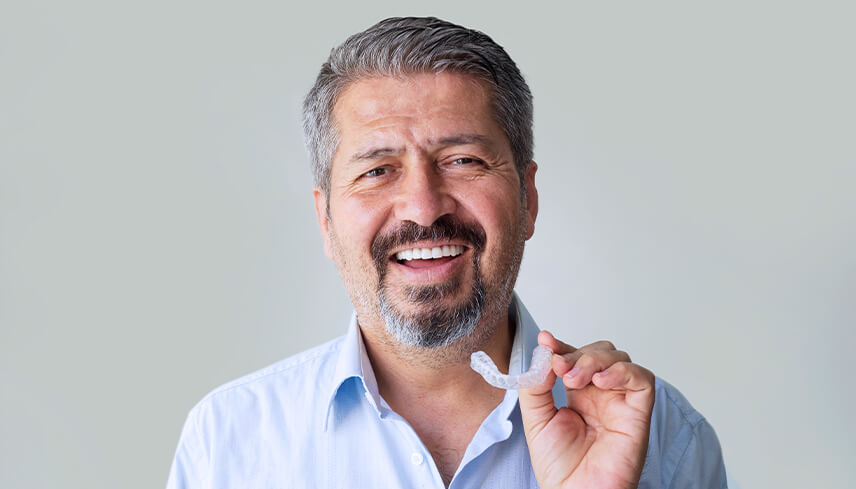
Modern options are discreet, comfortable, and often more convenient than expected. With digital planning and remote reviews, treatment can slot into busy work and travel schedules.
This guide answers the most common adult questions so you can choose with confidence and start when the timing is right.
Yes, you can get braces in your 50s
Healthy adults of any age can benefit from orthodontics. Key factors: gum health, bone support, and existing dental work.
At your assessment, a Specialist Orthodontist will review:
- Gum and bone health with X-rays; periodontal history if relevant
- Existing restorations, crowns, bridges, and implants
- Bite function, jaw joints, and signs of tooth wear or drifting
Adults often seek treatment for:
- Crowding
- Spaces
- Tooth shifting after extractions
- Preparing for new dental work
If gums are stable and hygiene is excellent, you are likely a candidate for Invisalign® aligners or braces.
Your main options, compared
Invisalign® aligners
- Visibility: Virtually clear; small tooth-coloured attachments
- Comfort: Smooth plastic; fewer cheek/lip irritations
- Eating: Remove to eat/drink except water
- Speech: Brief lisp may occur initially
- Hygiene: Normal brushing/flossing; clean aligners daily
- Appointments: Less frequent in-clinic, supported by Dental Monitoring
- Costs: Similar to braces for comparable cases; depends on complexity
Metal braces
- Visibility: Most noticeable
- Comfort: Brackets can rub initially; wax helps
- Eating: Avoid hard/sticky foods
- Speech: Usually unaffected after first days
- Hygiene: Detailed brushing and flossing required
- Appointments: Adjustments every 6–10 weeks
Clear ceramic braces
- Visibility: Tooth-coloured; blends in
- Comfort/Eating/Hygiene: Similar to metal braces
Lingual braces
- Visibility: Hidden behind teeth
- Comfort/Speech: Tongue adapts; slight lisp initially
- Hygiene: Careful cleaning on tongue side
- Appointments: Specialist adjustments; slightly longer early chair time
Hybrid approach: Some adults start with braces, then finish with aligners for fine-tuning.
For more on aligners for adults, see Invisalign® options in Canberra.
How long treatment takes
- Comprehensive braces: 12–24 months
- Short alignment or relapse corrections: 6–12 months
- Invisalign®: Varies; mild/moderate cases can match or beat braces with consistent wear and Dental Monitoring
Factors that shorten treatment:
- Consistent aligner wear (20–22 hours/day)
- Good gum health and hygiene
- On-time visits or Dental Monitoring submissions
Factors that extend treatment:
- Complex bite issues or extractions
- Missed appointments or broken brackets
- Inconsistent aligner wear
- Active gum disease requiring stabilization
What comfort feels like and simple relief
- Tenderness in first week is normal
- Braces: cheeks/lips may rub until tissues adapt
- Aligners: pressure first 1–2 days per new tray
Relief strategies:
- OTC pain relief as directed
- Orthodontic wax on brackets/wires
- Salt-water rinses
- Soft foods for 1–3 days
Call your orthodontist for severe/worsening pain, broken brackets/wires, or aligners that won’t seat.
Eating, speaking, and daily life
- Normal eating resumes in days
- Braces: avoid hard/sticky foods
- Aligners: remove for meals, brush, then reinsert
- Speech: brief lisp may occur; reading aloud helps adaptation
- Travel/work: aligners pack easily; braces require wax, brushes, elastics
- Dental Monitoring allows remote check-ins
Appointments and Digital Monitoring
- Braces: adjustments every 6–10 weeks
- Invisalign®: weekly or fortnightly tray changes; in-person visits less frequent
- Dental Monitoring supports remote reviews and quick feedback
Learn more at our Belconnen clinic and how we coordinate care across Canberra.
Getting started and what we record
- Photos, 3D iTero scan, and X-rays
- Gum health review
- Personalized plan with options, timelines, and costs
- Time to ask questions about comfort, travel, work, and maintenance
Book a free Invisalign® assessment to receive records and a personal treatment discussion.
Quick FAQ for adults in their 50s
- Can I get braces in my 50s? Yes, if gums and bone support are healthy
- Invisalign® or braces? Depends on bite, lifestyle, and preference
- Options: Invisalign®, metal braces, ceramic braces, lingual braces
- Pain: Tenderness first few days; OTC relief, wax, and soft foods help
- Treatment length: 12–24 months; shorter cases 6–12 months
- Eating: Normal within a few days; follow brace/aligner guidance
Summary and next steps
Age is not a barrier. With healthy gums and a personalized plan, you can straighten teeth comfortably and confidently in your 50s.
- Discreet: Invisalign® with Digital Monitoring for fewer clinic visits
- Complex bite: Braces remain reliable; options include metal, ceramic, and lingual
Book now: Free Invisalign® assessment or consultation with a Specialist Orthodontist at Belconnen, Manuka, or Gungahlin.
back


