 SHOP ONLINE
 REFERRALS
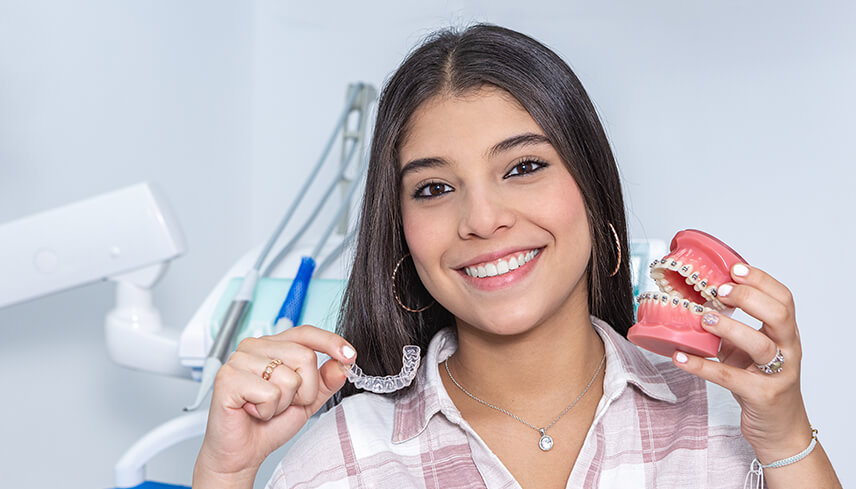
Both options can deliver excellent results. The right choice depends on your bite, lifestyle, and personal preferences. This guide breaks it down clearly so you can decide with confidence.
How they look
Appearance is often the biggest deciding factor.
Invisalign®: Clear, snug-fitting aligners that are barely noticeable in daily life. Small tooth-coloured attachments may be used to guide movement.
Braces: Fixed to your teeth at all times. Metal brackets are more visible, while ceramic braces blend in. Lingual braces sit behind the teeth and are hidden.
If you want a discreet option, Invisalign® or lingual braces are best. Ceramic braces offer a balance between visibility and effectiveness.
Everyday comfort
Both options use gentle forces to move teeth, so some tenderness is normal at the start.
Invisalign®: Smooth plastic with no wires or brackets, reducing irritation. You can remove aligners briefly if needed.
Braces: May feel bulky at first, but orthodontic wax helps and comfort improves quickly. Most discomfort settles within a few days after adjustments or new aligners.
Eating and drinking
This is where the biggest lifestyle difference appears.
Invisalign®: Remove aligners to eat and drink anything except water. No food restrictions, but you must reinsert aligners quickly.
Braces: Avoid hard, sticky and chewy foods that can damage brackets.
If flexibility with food matters to you, Invisalign® is often the preferred choice.
Oral hygiene
Keeping your teeth clean is essential during treatment.
Invisalign®: Brush and floss as normal once aligners are removed. Clean aligners daily with approved products.
Braces: Require more detailed cleaning around brackets and wires using interdental brushes or floss threaders.
Good hygiene helps prevent delays and keeps your smile healthy.
Appointments and time in the chair
Modern orthodontics is designed to fit busy schedules.
Invisalign®: Change aligners at home weekly or fortnightly. With Dental Monitoring, you can send scans remotely, reducing in-clinic visits.
Braces: Typically adjusted every 6 to 10 weeks. Remote monitoring can still support progress between visits.
This makes Invisalign® a strong option for those with tight schedules or frequent travel.
Sport, music and travel
Treatment should fit your lifestyle.
Invisalign®: Ideal for sport and performance. Remove aligners for mouthguards or events, then reinsert after.
Braces: Safe with a custom mouthguard. Wind instrument players may need a short adjustment period.
For active lifestyles, Invisalign® often provides greater flexibility.
How fast is each option?
Treatment speed depends on complexity and consistency.
Mild to moderate cases: Invisalign®can be just as fast as braces, sometimes faster with perfect wear.
Complex cases: Braces may be more efficient for certain movements.
Hybrid plans: Combining braces and Invisalign® can sometimes deliver the best results.
Consistency, whether wearing aligners or attending appointments, is key to staying on track.
Cost and value
At Embrace Orthodontists, Invisalign® is often priced similarly to braces for comparable cases.
Costs vary based on complexity and treatment length. Flexible payment plans and private health fund options are available to make treatment more accessible.
The best choice is the one that fits your lifestyle, not just your budget.
Common pitfalls and how to avoid them
Not wearing aligners enough: Aim for 20 to 22 hours per day.
Lost or damaged aligners: Keep a previous set as backup and contact your clinic quickly.
Missed appointments: Even with remote monitoring, key visits are essential.
Clear guidance and regular check-ins help keep your treatment on track.
When hybrid plans work best
Some cases benefit from combining both systems.
Short-term braces can handle complex movements, followed by Invisalign® for finishing.
This approach can improve efficiency, precision and overall comfort.
Simple decision checklist
Choose Invisalign® if you want:
- A low-visibility option
- Flexibility with food and sport
- Fewer in-clinic visits
Choose braces if you want:
- A fixed, set-and-forget solution
- Maximum control for complex cases
- No need to remember wear time
Still unsure? A consultation will clarify your best option.
FAQs
Should I get Invisalign® or braces?
It depends on your bite, lifestyle and goals. Both options work well for many cases.
Is Invisalign® faster than braces?
Sometimes, especially for mild to moderate cases with consistent wear.
Is Invisalign® cheaper than braces?
Not always. Costs are often similar depending on complexity.
Why do people stop Invisalign®?
The most common reason is not wearing aligners enough each day.
What is the best alternative to Invisalign®?
Ceramic or lingual braces are discreet fixed options, or a hybrid plan may be recommended.
Ready for personalised advice?
Choosing between Invisalign® and braces is easier with expert guidance. At Embrace Orthodontists, your free Invisalign® assessment includes a personalised plan and iTero 3D scan preview.
Book a consultation today and take the first step towards a confident, healthy smile.
back


